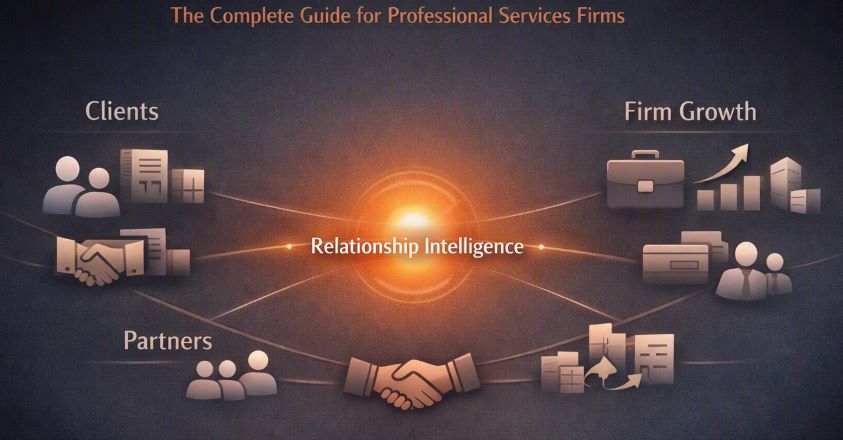
You didn’t lose that client because your work wasn’t good enough. You lost them because the relationship wasn’t managed well enough. That’s the problem Business Relationship Management (BRM) exists to solve — a structured way of treating client relationships as something you actively build, measure, and grow, rather than something that just happens between projects.
What Is Business Relationship Management?
Most professional services firms manage client relationships the way people manage their health — they pay attention only when something goes wrong. A client complains, a contract doesn’t renew, a competitor wins a pitch nobody knew was happening. Then there’s a scramble to fix things.
BRM flips that model. Instead of reacting to problems, you’re proactively managing every relationship in your portfolio:
- Tracking relationship health continuously, not just at renewal time
- Spotting early warning signs before they become churn
- Identifying growth opportunities inside accounts you already have
- Building the kind of trust that makes clients stay for years, not projects
It’s not about being “nice” to clients. It’s a repeatable, data-driven system for relationship growth — connected directly to revenue outcomes.
Why Business Relationship Management Matters
Business Relationship Management matters because in professional services, client relationships are the primary driver of revenue. Firms that actively manage relationship health retain more clients, expand accounts faster, and generate more referrals. Without BRM, firms are flying blind — reacting to client losses instead of preventing them.
Here’s what most firms don’t want to admit:
- The majority of client churn isn’t caused by bad work — it’s caused by relationship neglect
- Most account expansion opportunities are invisible, sitting inside relationships nobody is actively managing
- The clients most likely to leave often look fine on the surface, right up until they don’t
The math backs this up: increasing client retention by just 5% can increase profits by 25% to 95%, and acquiring a new client costs 5 to 25 times more than retaining an existing one. The problem isn’t the math — it’s that most firms don’t have a structured system for BRM. They have good intentions, a CRM full of contact records, and the optimism that if the work is good, the relationship will take care of itself. It won’t. Not at scale. Not without a system.
The Core Principles of Business Relationship Management
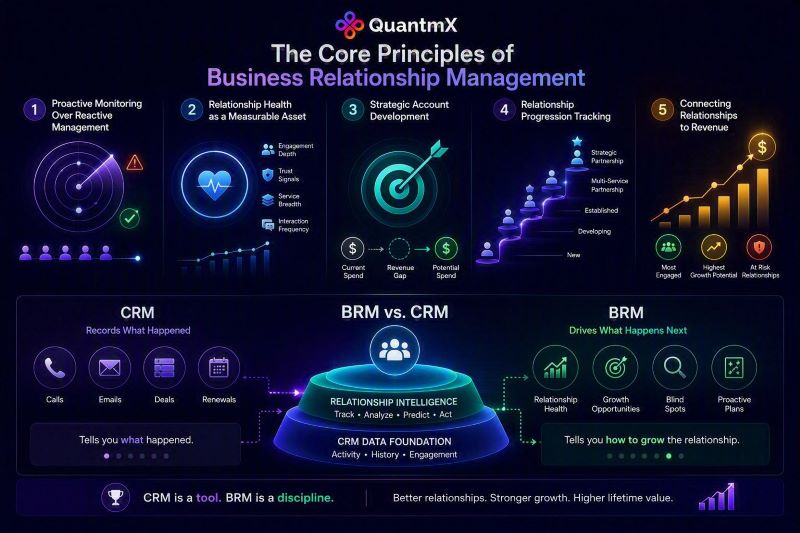
The core principles of BRM are proactive monitoring, relationship health measurement, strategic account development, progression tracking, and connecting relationship quality to revenue. Together, they turn client relationship management from a passive activity into an active growth strategy.
1. Proactive Monitoring Over Reactive Management
The foundation of BRM is shifting from reactive to proactive. You don’t wait for a client to complain or a contract to come up for renewal — you track relationship health continuously and act on early signals before a problem becomes a loss.
2. Relationship Health as a Measurable Asset
Strong BRM means treating relationship health the way you treat financial health — measured and tracked over time. This goes beyond activity metrics (calls made, emails sent) into actual relationship quality:
- Engagement depth
- Trust signals
- Service breadth
- Interaction frequency
This is where Relationship Intelligence comes in — turning qualitative relationship signals into quantifiable, actionable data.
3. Strategic Account Development
Every client relationship has a Revenue Gap — the distance between what a client is currently buying and what they could be buying based on their needs and your capabilities. Great BRM means actively closing that gap through deliberate account development, not waiting for clients to ask for more.
4. Relationship Progression Tracking
Not all client relationships sit at the same stage:
- Some are new and still building trust
- Some are established but stagnant
- Some are deep, multi-service partnerships
BRM requires knowing where every relationship is in its progression — and having a clear plan to move it to the next stage.
5. Connecting Relationships to Revenue
The ultimate test of BRM is whether it drives measurable business outcomes. Firms that do this well can draw a direct line between relationship quality and revenue performance — they know which clients are most engaged, which accounts have the highest growth potential, and which relationships are at risk.
Business Relationship Management vs. CRM
A CRM records what happened with a client — calls, deals, emails. Business Relationship Management is a strategic practice that uses those records, plus additional relationship intelligence, to actively grow the quality of each client relationship. CRM is a tool. BRM is a discipline.
A CRM logs activity: a call was made, a deal moved to “proposal,” a renewal date is coming up. It tells you what happened. It doesn’t tell you how strong the relationship actually is, where growth opportunities are hiding, or which clients are quietly drifting toward a competitor.
BRM sits above the CRM, asking different questions:
- Is this relationship getting stronger or weaker over time?
- What’s the Total Relationship Value of this account — and how much of it are we actually capturing?
- Where are the Relationship Blind Spots in our portfolio — the accounts we think are fine but aren’t?
- What’s our plan to develop this relationship from transactional to strategic?
Who Is a Business Relationship Manager?
A Business Relationship Manager is responsible for maintaining and growing the quality of key client relationships within a firm. The role sits at the intersection of account management, strategic consulting, and relationship development — focused on long-term partnership growth rather than individual project delivery.
In larger firms, this is a dedicated role. In smaller firms, it’s a responsibility carried by account leads, partners, or senior advisors. Either way, the job involves the same core activities:
- Regular relationship health reviews, not just project check-ins
- Identifying and closing the Revenue Gap within each account
- Building multi-level relationships across the client organization
- Flagging relationship risks before they become client losses
- Mapping the progression of each relationship and setting development goals
Without the right tools, Business Relationship Managers are working from instinct and spreadsheets — which means they miss signals, lose visibility across large portfolios, and can’t prioritize effectively. A Relationship Growth Platform solves this by giving them a real-time view of every account: health scores, engagement signals, progression stages, and revenue opportunity maps.
The Biggest Business Relationship Management Mistakes
The most common mistakes firms make cluster around five patterns:
Treating BRM as informal. Most firms manage client relationships through personal charm and institutional memory — “Sarah knows that client well, we’re fine.” That’s not a system. It’s a single point of failure. When Sarah leaves, so does the relationship.
Confusing activity for health. Sending emails and attending meetings is not the same as having a healthy relationship. High-frequency contact with low engagement depth is a warning sign, not a green flag.
Managing relationships reactively. The most expensive BRM mistake is waiting for clients to signal dissatisfaction before acting. By the time a client raises a concern, they’ve usually already started evaluating alternatives.
Having no relationship progression plan. Healthy relationships don’t maintain themselves — they grow. Firms without a deliberate plan for moving each client relationship from transactional to strategic are leaving significant revenue on the table.
Ignoring Relationship Blind Spots. This is when your team assumes a client relationship is healthy but the data tells a different story — engagement is down, service breadth is stagnant, the key contact has been quiet for weeks. Without Relationship Intelligence, a firm doesn’t see this until it’s too late.
How a Relationship Growth Platform Supports BRM
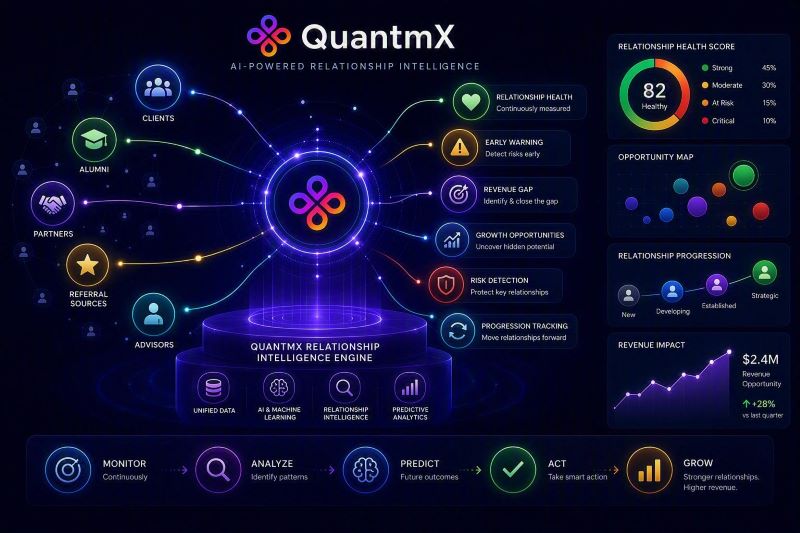
A Relationship Growth Platform supports Business Relationship Management by providing real-time relationship health scores, surfacing revenue opportunities within existing accounts, identifying at-risk relationships early, and tracking progression across the entire client portfolio. It turns BRM from a philosophy into a data-driven, repeatable practice.
This is where QuantmX comes in — a Relationship Growth Platform built specifically for professional services firms that want to take BRM seriously. Here’s what it gives your firm that a CRM doesn’t:
- Relationship Health Scores — real-time, data-driven signals on every account, so you always know which relationships are strong, drifting, or at risk
- Total Relationship Value (TRV) — a clear view of the full revenue potential within each client account, and how much you’re currently capturing
- Relationship Blind Spot Detection — early warnings on at-risk accounts before clients start looking elsewhere
- Progression Tracking — visibility into where each relationship sits in its development arc, and what the next step should be
- Relationship Intelligence — turning the invisible signals of relationship quality into actionable, measurable data
QuantmX doesn’t replace your CRM. It adds the strategic layer your CRM was never designed to provide.
The Bottom Line
Business Relationship Management isn’t a concept for large enterprises with dedicated BRM departments. It’s a discipline every professional services firm needs — one that most firms are currently doing informally, inconsistently, and without the visibility to do it well.
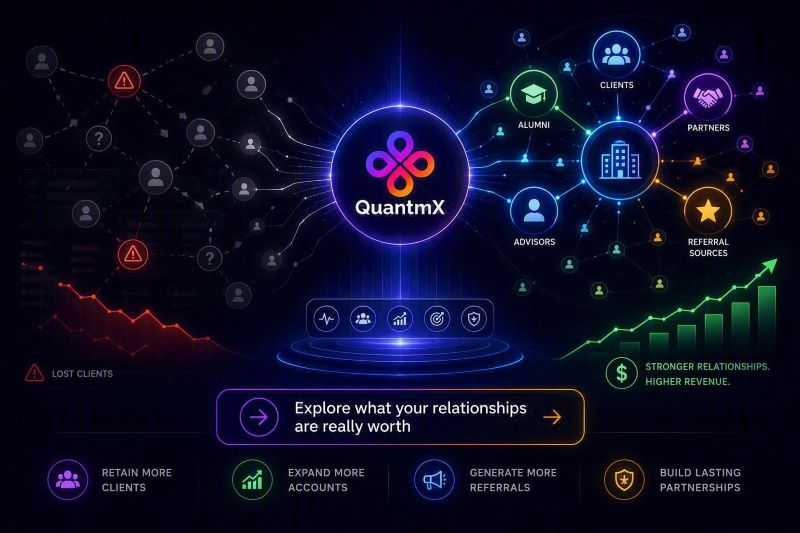
The firms that get this right will retain more clients, expand more accounts, generate more referrals, and build the kind of long-term partnerships that competitors can’t easily steal. The ones that don’t will keep losing relationships they thought were safe — and wondering why the work wasn’t enough.
The work is rarely the problem. The relationship system is.
Explore what your relationships are really worth →
Frequently Asked Questions
What is Business Relationship Management?
Business Relationship Management is the practice of actively managing the quality, depth, and health of client relationships as a strategic asset. It involves:
- Monitoring relationship health continuously
- Identifying revenue opportunities within existing accounts
- Preventing client churn through proactive engagement
- Building structured systems for long-term account growth
BRM applies to any firm where client relationships are the primary driver of revenue.
What does a Business Relationship Manager do?
A Business Relationship Manager is responsible for maintaining and growing the quality of key client relationships within a firm. Their core activities include:
- Conducting regular relationship health reviews
- Identifying and closing revenue gaps within accounts
- Building relationships across multiple stakeholders in the client organization
- Flagging at-risk accounts early
- Developing relationship progression plans for each key account
What is the difference between Business Relationship Management and CRM?
A CRM is a tool that records client interactions and tracks transactions — calls, deals, emails, and renewal dates. Business Relationship Management is a strategic practice that uses relationship intelligence to actively grow client relationships. In short:
- CRM tells you what happened
- BRM tells you what the relationship is worth, where it’s headed, and what to do next
A Relationship Growth Platform provides the infrastructure for both.
Why is Business Relationship Management important for professional services firms?
In professional services, client relationships are the primary source of revenue — through retainers, repeat engagements, account expansion, and referrals. BRM matters because it gives firms a structured system for managing that revenue source proactively, rather than reactively:
- Retaining existing clients is dramatically more cost-effective than acquiring new ones
- Small improvements in retention have an outsized impact on profitability
What is Relationship Intelligence in the context of Business Relationship Management?
Relationship Intelligence is the ability to measure the health and potential of a client relationship using data rather than instinct. It draws on signals like:
- Engagement frequency
- Service breadth
- Interaction depth
- Stakeholder coverage
- Account expansion patterns
It turns the invisible state of a relationship into something a firm can track, measure, and act on systematically.
What is a Relationship Growth Platform?
A Relationship Growth Platform is a system designed to help professional services firms actively track, measure, and grow client relationships. Unlike a CRM, which records activity, it goes further:
- Provides real-time relationship health scores
- Surfaces untapped revenue within existing accounts
- Identifies at-risk relationships before they churn
- Tracks relationship progression across an entire client portfolio
How does Business Relationship Management apply to law firms?
Law firm client relationships often span decades but get managed informally through individual partner memory rather than a firm-wide system. BRM brings structure to that:
- Tracking which practice-area referral relationships across the firm are active versus dormant
- Surfacing account expansion opportunities when a corporate client’s legal needs grow beyond the original engagement
- Flagging when a key relationship partner’s contact with a major client has gone quiet
- Preserving relationship history when an associate or partner transitions off an account
Without this, a firm’s most valuable client relationships live entirely in the heads of the partners who built them.
How does Business Relationship Management apply to accounting and advisory firms?
Accounting firms tend to treat the client relationship as closed the moment the engagement (tax season, audit cycle) ends — which is exactly when BRM should kick in. It means:
- Measuring engagement depth between cycles, not just during active work
- Identifying which clients are ready for advisory services beyond core compliance work
- Tracking whether a client relationship is stagnant at one service line or expanding
- Catching early signals — reduced responsiveness, fewer questions, slower document turnaround — before a client quietly moves to a competitor
How does Business Relationship Management apply to marketing and creative agencies?
Agency-client relationships are especially vulnerable to the “activity vs. health” trap — lots of meetings and deliverables can mask a relationship that’s actually stagnant. BRM addresses this by:
- Measuring whether the account is expanding into new services or stuck at the original scope
- Tracking stakeholder coverage, since agency relationships often run through a single marketing contact who could leave
- Flagging accounts where deliverable volume is high but strategic input from the client has dropped
- Building a progression plan to move a project-based client toward a retainer relationship
How does Business Relationship Management apply to wealth management and financial advisory firms?
In wealth management, the relationship itself is often the entire product — which makes BRM’s health-tracking function especially high-stakes:
- Monitoring engagement signals like response time and meeting cadence as early indicators of client satisfaction
- Identifying accounts with assets held elsewhere that represent an expansion opportunity
- Tracking multi-generational relationships so the connection to the family doesn’t rest on one advisor
- Catching the early signs of a client quietly consolidating assets with a competitor
How does Business Relationship Management apply to engineering and architecture firms?
Because project cycles are long and episodic, BRM has to account for relationships that go quiet between engagements without actually going cold:
- Tracking relationship health with developers and general contractors across multi-year project gaps
- Measuring whether a client relationship is limited to one project type or has the potential to expand into others
- Flagging when a previously reliable referral source (a GC, a fellow consultant) hasn’t sent an introduction in a while
- Maintaining relationship continuity when a project lead moves to a different firm mid-relationship
How does Business Relationship Management apply to IT and management consulting firms?
Consulting relationships often start narrow (one project, one stakeholder) and either expand into a broader partnership or stall — BRM is what determines which:
- Measuring whether a single-project engagement is progressing toward a multi-year advisory relationship
- Tracking stakeholder expansion within the client organization, since a relationship with one buyer is fragile
- Identifying accounts where billable activity is steady but strategic trust isn’t deepening
- Surfacing relationships with former project sponsors who’ve since moved into new buyer roles elsewhere
How does Business Relationship Management apply to insurance brokerages and risk advisory firms?
Insurance relationships are renewal-driven, which creates a false sense of security — a renewed policy isn’t the same as a healthy relationship. BRM corrects for that:
- Distinguishing between clients who renew out of inertia and clients who are actively engaged
- Identifying coverage gaps or emerging risk areas the client hasn’t been advised on yet — a Revenue Gap in practice
- Tracking relationship health separately from renewal status, since churn risk often builds quietly before a renewal date
- Flagging when a client’s primary contact changes, since new stakeholders often re-evaluate the relationship from scratch
How does Business Relationship Management apply to executive search and recruiting firms?
Search firms live on repeat client relationships and candidate-turned-client alumni — both of which decay invisibly without active management:
- Tracking which client relationships have gone quiet since the last successful placement
- Identifying candidates placed years ago who are now in hiring positions themselves
- Measuring whether a client relationship is limited to one search type or could expand into broader talent advisory work
- Flagging when a key HR or hiring-manager contact leaves the client company, since that relationship often needs to be rebuilt from zero